
Nowadays, customers expect quick answers, and waiting until morning to respond to a late-night question usually means losing that sale. The challenge has always been staffing for 24/7 support when you’re running a small business. Hiring enough people to cover all time zones isn’t realistic for most OpenCart stores.
Knowband’s OpenCart AI Chatbot Extension addresses this gap by bringing ChatGPT capabilities directly into your store. Instead of customers sending emails and waiting hours for replies, they get instant responses pulled from your actual product data and store information.
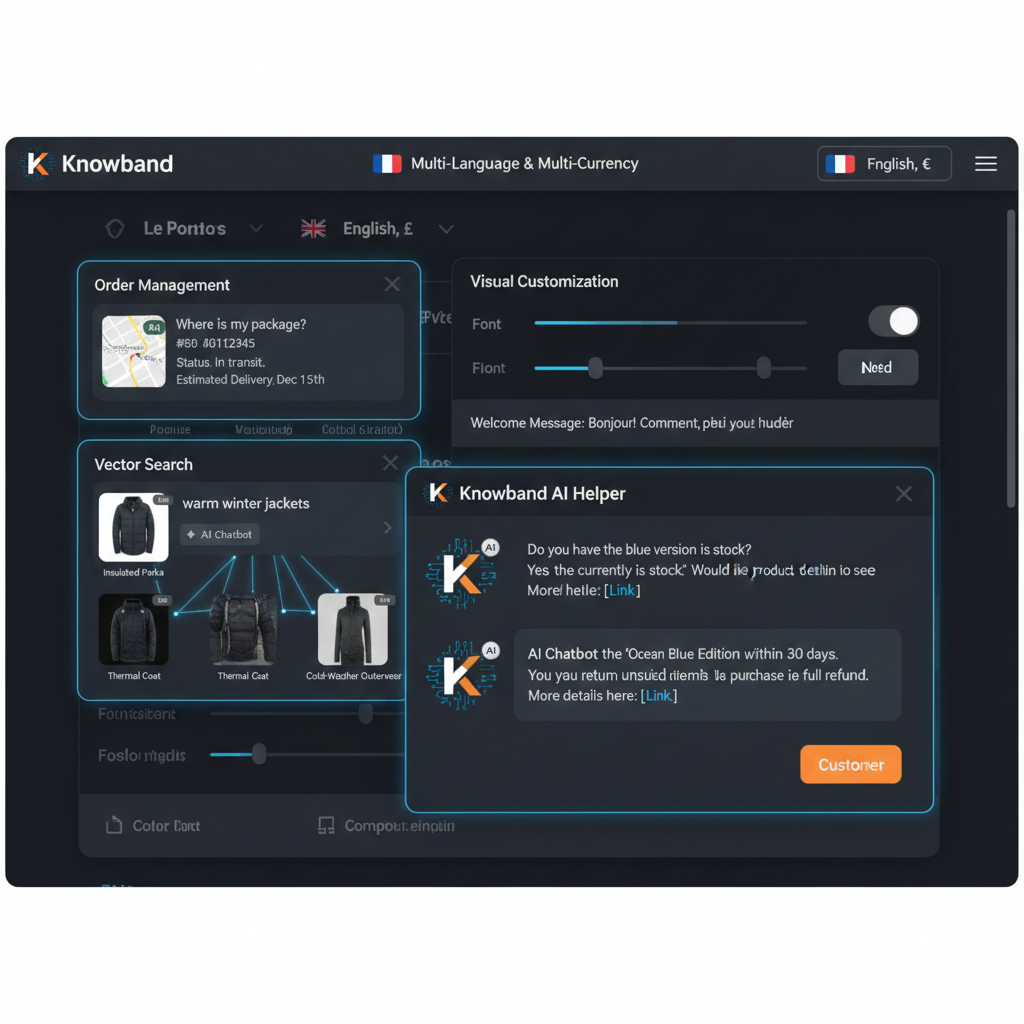
Real-Time Intelligence That Understands Context
The chatbot accesses your live store data, current inventory counts, exact prices, and product specifications. When a customer asks, “Do you have the blue version in stock?” the system checks your database and responds with accurate availability. It’s not pulling from cached information or giving generic answers.
ChatGPT integration means conversations feel natural. A customer can ask about shipping, then immediately switch to asking about your return window, and the bot maintains that conversational thread. This works because the underlying technology tracks context across multiple exchanges rather than treating each question as isolated.
Vector Search Makes Product Discovery Work
Standard chatbots match exact keywords. If your product description says “athletic footwear”, but a customer types “running shoes,” basic systems might return nothing. Vector search through Qdrant changes this by processing meaning instead of just matching text strings.
The technology recognizes semantic relationships. “Budget-friendly” and “inexpensive” register as equivalent concepts. “Children’s clothing” and “kids’ apparel” point to the same inventory. When someone asks for “warm winter jackets,” the system understands they want cold-weather outerwear even if your products are tagged differently. Search accuracy improves substantially because the AI-powered Chatbot for Opencart interprets customer intent.
Complete Order Management Through Conversation
Logged-in customers can retrieve their purchase history by asking and not clicking through account menus or searching old emails for order numbers. The chatbot pulls order details, dates, item lists, and current fulfillment status directly from your database.
Shipment tracking works the same way. Customers type an order ID and get tracking details immediately. This handles a large volume of basic “where’s my package” inquiries without any staff involvement.
Multi-Language and Multi-Currency Support
International stores deal with language barriers and currency confusion constantly. The chatbot detects which language version of your store someone is viewing and responds accordingly. French site visitors get French responses with Euro pricing. English site visitors get English with the appropriate currency.
This adaptation happens automatically based on your store configuration. You don’t maintain separate chatbot instances for different markets; one system adjusts to whatever language and currency each customer uses.
Full Visual Customization
The chatbot doesn’t lock you into predetermined colors or layouts. Chat window background, message bubbles, buttons, text styling, even the logo, everything adapts to match your brand design.
Store owners using specific brand colors can replicate those throughout the chat interface. The customization extends to welcome messages and titles for each supported language, so the first thing customers see aligns with your brand voice.
Why This Actually Matters for Store Performance
Customer service volume drops immediately. Product questions, stock checks, policy inquiries, and basic troubleshooting are all handled without staff time. Your team deals with genuinely complex issues that need human judgment.
Response speed matters more than people realize. Customers shopping at 11 PM get instant answers instead of waiting until your support team comes online the next morning. That immediacy keeps people engaged during active shopping sessions rather than wandering off to competitors.
Late-night and weekend traffic is much higher for e-commerce stores than most store owners expect. The chatbot provides consistent service quality regardless of when someone visits your store.
Product discovery improves when customers describe what they need in regular language. Instead of fumbling through category menus or fighting with search filters, they type “comfortable shoes for warehouse work” and get relevant results based on that description.
Conclusion
The OpenCart AI Chatbot Extension solves a practical problem: how do you provide decent customer support without hiring proportionally more people as traffic grows? The technology has reached a point where AI handles routine questions reliably, which frees up human staff for situations requiring actual judgment calls.
Setup uses standard OpenCart administration. You connect API keys from OpenAI and Qdrant, configure your visual preferences, and you’re operational. Store owners comfortable with basic OpenCart settings can handle implementation.
Moreover, growing stores and international operations benefit most obviously from the automation and language support. The same chatbot serving ten conversations daily scales to hundreds without configuration changes or added resources.
E-commerce keeps moving toward instant gratification and always-available service. Chatbots have gone from experimental add-ons to expected functionality for stores that take customer experience seriously.

