
Have you noticed the same customers buying from you once, then quietly drifting to a competitor who shows up on their home screen every day? That gap usually traces back to one decision: whether or not your store has an OpenCart Mobile App. Merchants who keep sending phone traffic to a browser are handing their most valuable buyers to rivals who built an OpenCart mobile app solution months ago.
The uncomfortable part is that the traffic is already there. Roughly 60% of eCommerce visits now come from mobile devices, yet mobile browser sessions convert far below desktop. You are paying to bring shoppers in, and the mobile browser experience is one of the biggest gaps.
This is not a discovery problem. Your marketing is working well enough to earn the first visit. What breaks down is the second, third, and tenth visit, and that is exactly where an app changes the outcome.
Why a Mobile Browser Keeps Losing Your Repeat Buyers
A responsive website and an app are not two versions of the same thing. The website is built to be found. The app is built to bring people back.
Push notifications are the clearest example. A browser cannot tap a customer on the shoulder when their abandoned cart is still sitting there, but an app can. That single channel is why cart abandonment recovery and repeat purchases behave so differently across the two.
Speed matters too. A browser reloads and re-authenticates on every visit, while a mobile app remembers the user and re-engages them. Fewer steps means less friction, and less friction means a higher mobile conversion rate over time.
Then there is presence. A website lives behind a URL the shopper has to remember and retype, while an app sits as an icon on the phone, seen dozens of times a day. That constant visibility is a marketing asset your competitors get for free once their app is installed.
What the Retention Numbers Actually Say
The reason app-first competitors pull ahead is not branding. It is math.
According to Criteo, app users convert at roughly three times the rate of mobile browser shoppers. Industry retail comparisons for 2026 put app-driven repeat purchases at three to five times higher than mobile web, with a meaningful lift in customer lifetime value once loyal buyers move into the app.
There is a second figure worth sitting with. Reports on 2026 mobile usage show shoppers spend the overwhelming majority of their phone time inside apps rather than browsers. So the channel where people already live is the one most OpenCart stores are absent from.
Here is the split that matters when you decide where to invest:
| Features | Mobile browser store | Dedicated shopping app |
| Repeat purchase rate | Baseline | 3-5x higher |
| Re-engagement channel | Email, paid ads | Push notifications (free, direct) |
| Checkout | Multi-step, re-login | One-tap checkout, saved details |
| Customer return trigger | Must remember your URL | App icon on home screen |
| Load behavior | Reloads every visit | Instant, cached, logged in |
Read that table as a leak report. Every row is a place where a browser-only store loses ground it does not need to lose.
Which App Features Actually Create the Repeat Habit
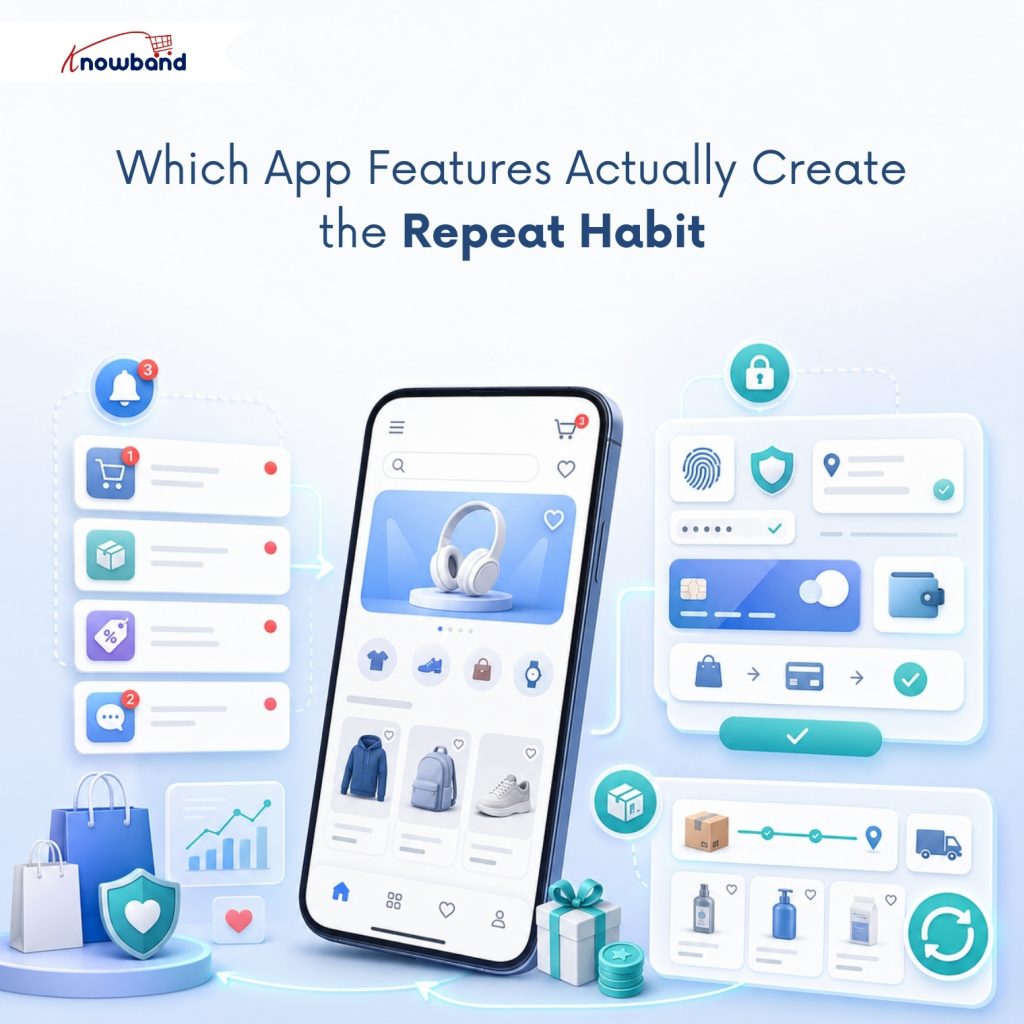
Going mobile only pays off if the app does the things a browser structurally cannot. A few features carry most of the weight, and they are worth understanding before you build.
The first is the notification loop. Automated abandoned cart alerts, order-status updates, and the occasional targeted offer keep your store in the customer’s day without extra ad spend. Each nudge is a low-cost reason to return.
The second is stored identity. When an app holds a shopper’s login, saved addresses, and payment preference, one-tap checkout becomes real rather than a slogan. That saved friction is what turns a considered purchase into an impulse one.
The third is post-purchase engagement. Real-time order tracking and a visible re-order button give buyers a reason to open the app after the sale, and reopening is where the next order starts. Wishlists work the same way, quietly bookmarking intent for later.
A Simple Scenario Most Merchants Recognize
Picture two OpenCart stores selling the same category at similar prices. Both run ads, both get mobile traffic, both close a first sale.
The browser-only store then goes quiet. The customer has to remember the URL, retype their details, and re-enter shipping every time, so most of them simply do not come back until another ad drags them in at full cost.
The app-first store sends a gentle push when a restock lands or a cart is left behind, opens straight to a logged-in home screen, and completes checkout in a tap. Over a quarter, the second store books far more from the same customer base, without spending more to acquire it. Multiply that across your whole list, and the retention gap stops being abstract.
Building the App Is No Longer the Hard Part
Most merchants already accept the argument. What stops them is the assumption that an app means a development team, a large budget, and months of waiting. That assumption is now outdated.
A no-code build path changes the calculation entirely. You keep your existing OpenCart store, its products, and its payment and shipping setup, and the app simply mirrors it in real time. No separate codebase to maintain, no rebuild.
The OpenCart Mobile App Creator That Closes the Gap
When the problem is repeat-customer leakage, and the blocker is build complexity, the direct fix is Knowband’s OpenCart Mobile App Builder. It converts your live store into fully functional Android and iOS shopping apps without any coding, so the retention features described above stop being theoretical and start running on your store within days.
A few capabilities map straight to the pain points already raised:
- Unlimited push notifications, including automated abandoned cart and order-status alerts, the exact channel a browser can never give you.
- A simplified checkout with saved profiles, plus fingerprint and OTP login, cutting the friction that kills mobile conversion.
- Real-time order tracking and a re-order button, both of which pull past buyers back for the next purchase.
- A drag-and-drop home screen layout, so merchandising stays in your hands, not a developer’s queue.
As an OpenCart Mobile App Creator, it produces ready-to-publish app files in one to two working days from your specifications. Being a true Android and iOS App Maker for OpenCart, it delivers both platforms from a single setup rather than two costly builds.
How to Move Without Disrupting Your Store
You do not need to pause selling to go mobile. Install the extension, share your app requirements, and publish the returned files to the Play Store and App Store.
Your website keeps doing what it does best, which is getting found and acquiring new shoppers. The app takes over the part the browser was always weak at: holding on to the people who already trust you. That division of labor is the whole point, and it is what app-first competitors figured out first.
The Cost of Waiting Another Quarter
Every month without an OpenCart Mobile App is a month you lose repeat buyers to your competitor. The traffic is already mobile, the solution is no longer expensive, and the retention gap is measurable.
If you want to bridge the gap, the fastest route is a proven Android and iOS App Maker for OpenCart that mirrors your existing store rather than rebuilding it. The stores winning your customers did not out-market you. They just showed up on the home screen first.
Frequently Asked Questions
Is a mobile app really necessary if my OpenCart site is already responsive?
A responsive site helps you get found, but it cannot send push notifications, store a logged-in identity, or sit on the home screen. Those three gaps are precisely where repeat purchases are won or lost, so the two serve different jobs rather than replacing each other.
How long does it take to launch Android and iOS apps for an OpenCart store?
With a no-code builder, you share your specifications and receive ready-to-publish app files in one to two working days. The apps mirror your existing store, so there is no rebuild of products, payments, or shipping.
Will an app cannibalize my website sales?
No. The website continues acquiring new shoppers through search, while the app captures returning buyers who would otherwise drift. In practice, the two channels compound, lifting total revenue rather than splitting it.


